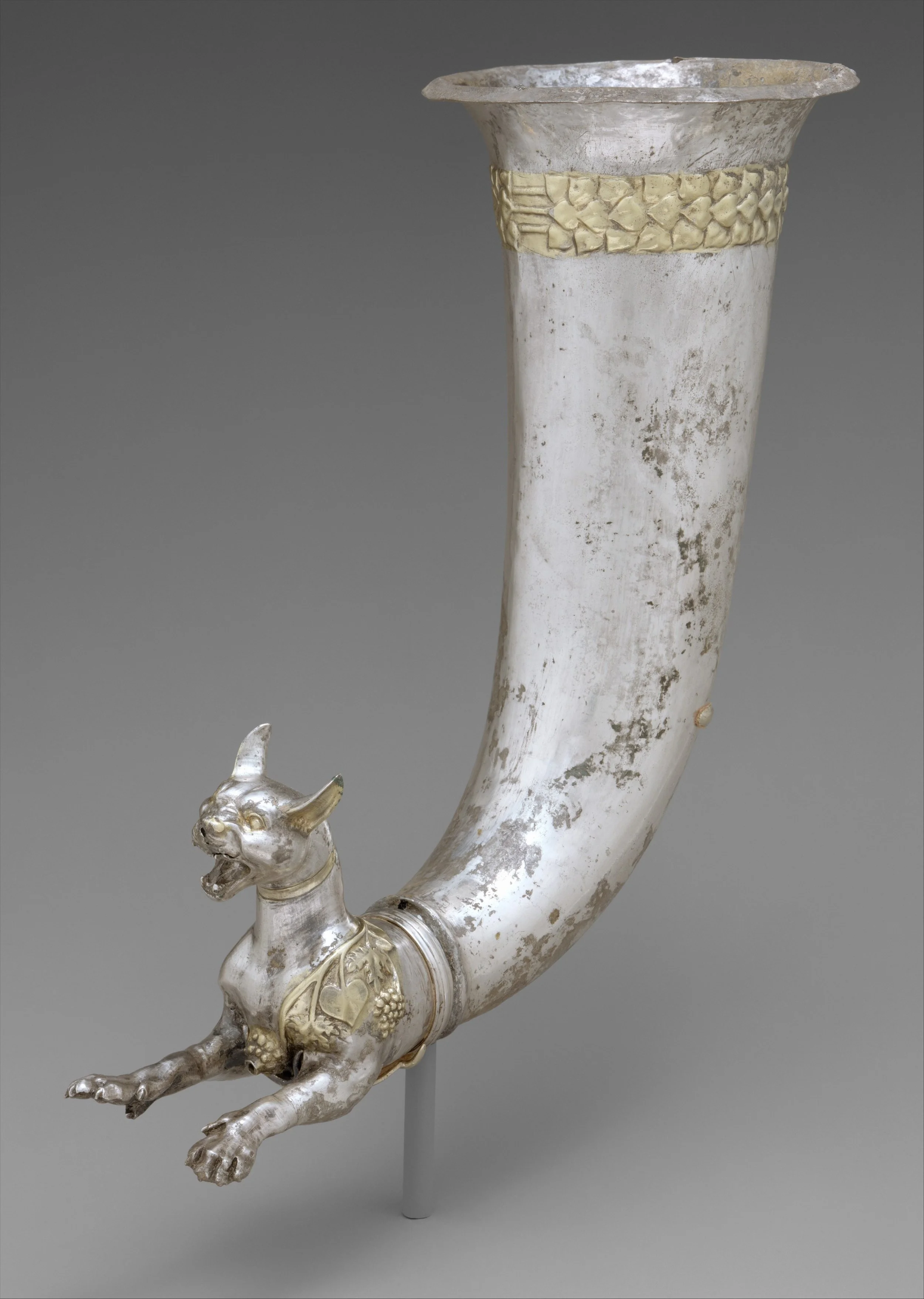
Rhyta
A rhyton is a ceremonial drinking and pouring vessel that first appeared in the Bronze Age and became widespread across ancient Eurasia, particularly in regions such as Persia, Greece, Thrace, and the broader Near East. Traditionally, rhyta were designed with a tapering, hornlike-form and featured a sculptural protome, often an animal, mythological creature, or human figure at the terminal end. This terminal typically included an opening through which liquid could flow, allowing the vessel to function as both a ritual cup and a controlled-pouring device.
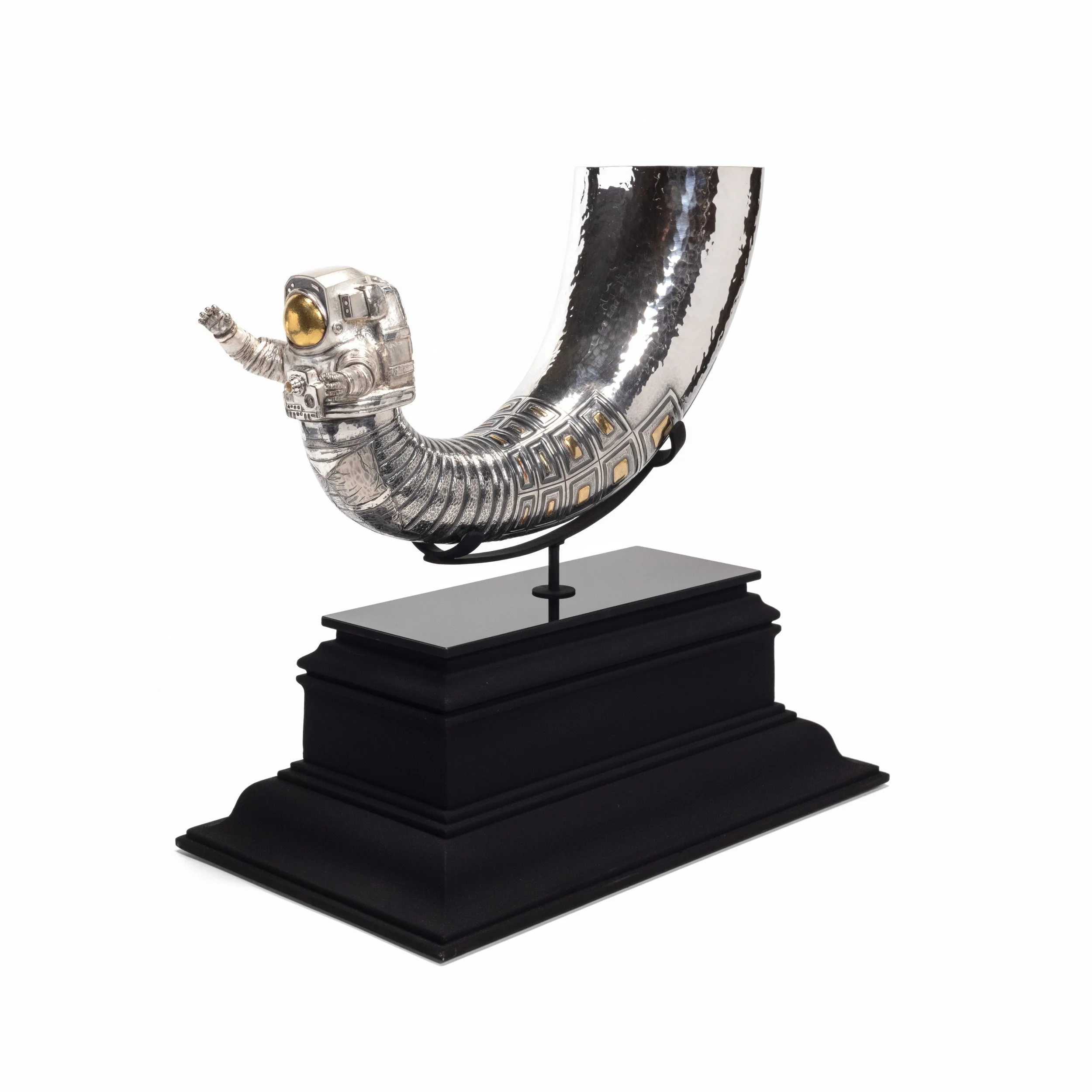

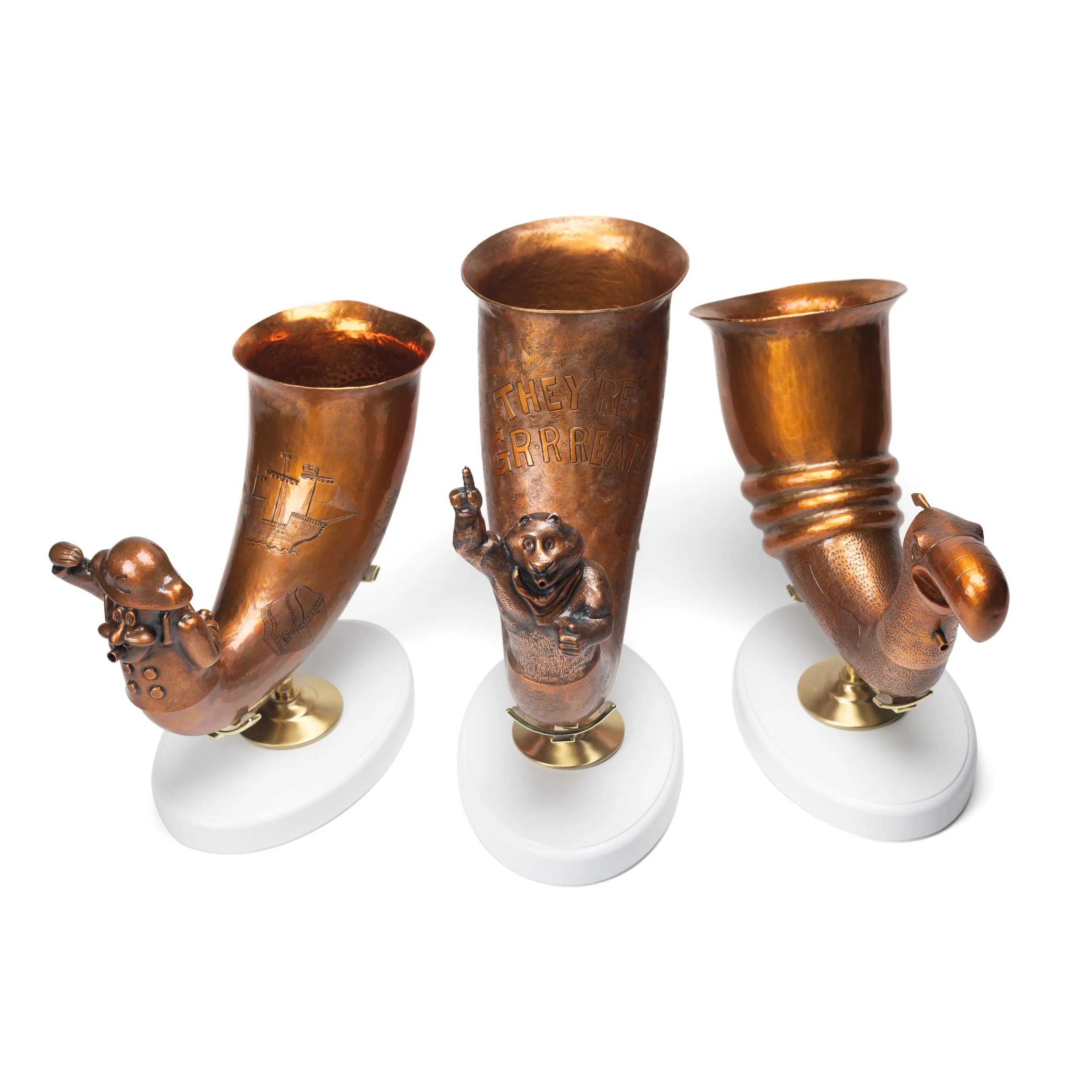
Historical Inspiration
Rhyta were used in a range of ceremonial contexts, from libation rituals to elite banquets, and they often reflected the cultural symbolism, religious beliefs, and artistic styles of the societies that produced them. The sculpted protomes; ranging from bulls, lions, griffins and deities, served not only a decorative purpose but also conveyed power, protection, or spiritual significance. Over time, the rhyton evolved into a highly expressive form of metalwork and ceramics, blending utilitarian function with elaborate artistic storytelling.
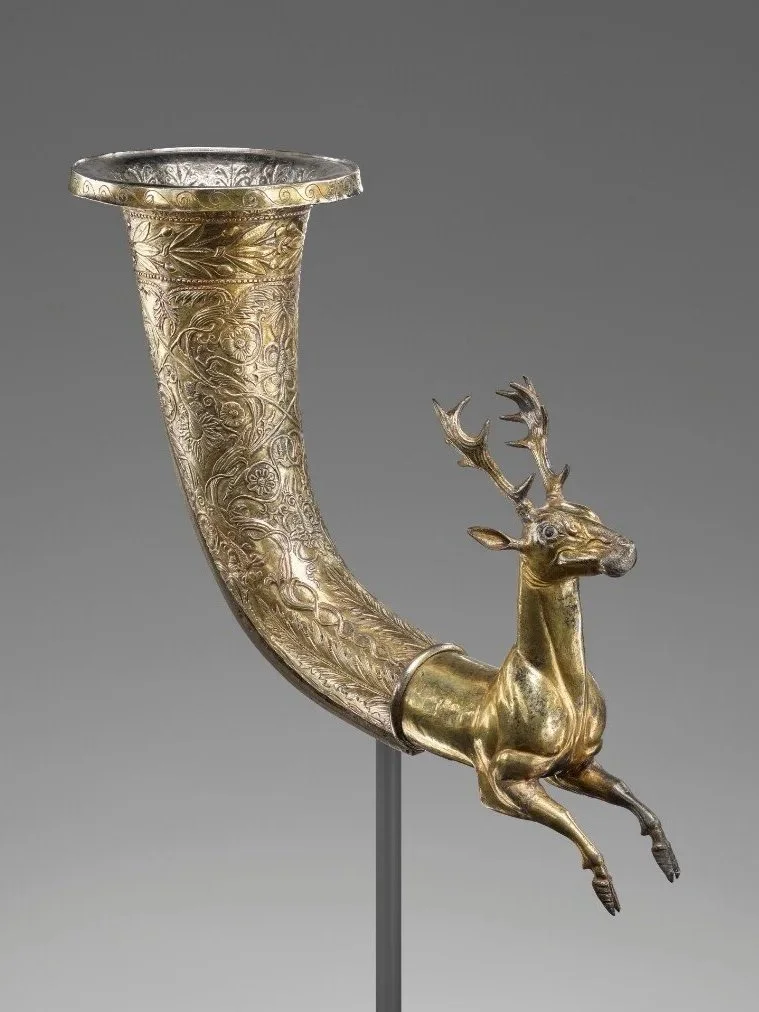
Stag Rhyton, 100–1 B.C.
Unknown artist/maker
On view at
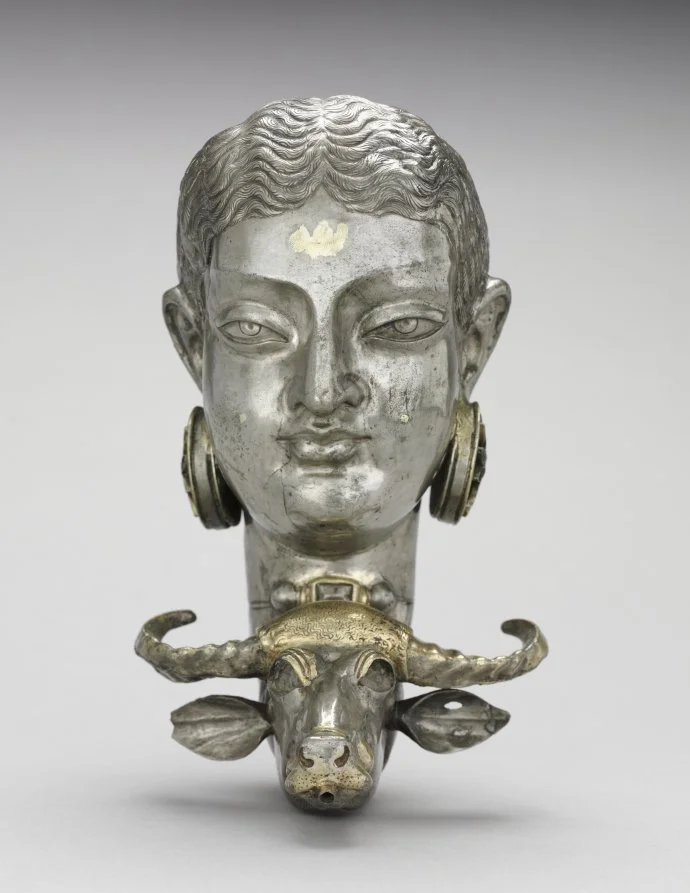
Woman & Water Buffalo, 500–700
Sasanian, Iran, 600s or Turk Shahi dynasty, Kabul, Afghanistan, 500s
On view at The Cleveland Museum of Art, 102A Ancient Near East